Last week, I was working from my client’s office in Hong Kong where we are currently deep into a large project together. I usually enjoy the energy in this newly established open-plan office overlooking the harbour. It’s a young and dynamic team, and the atmosphere reflects that.
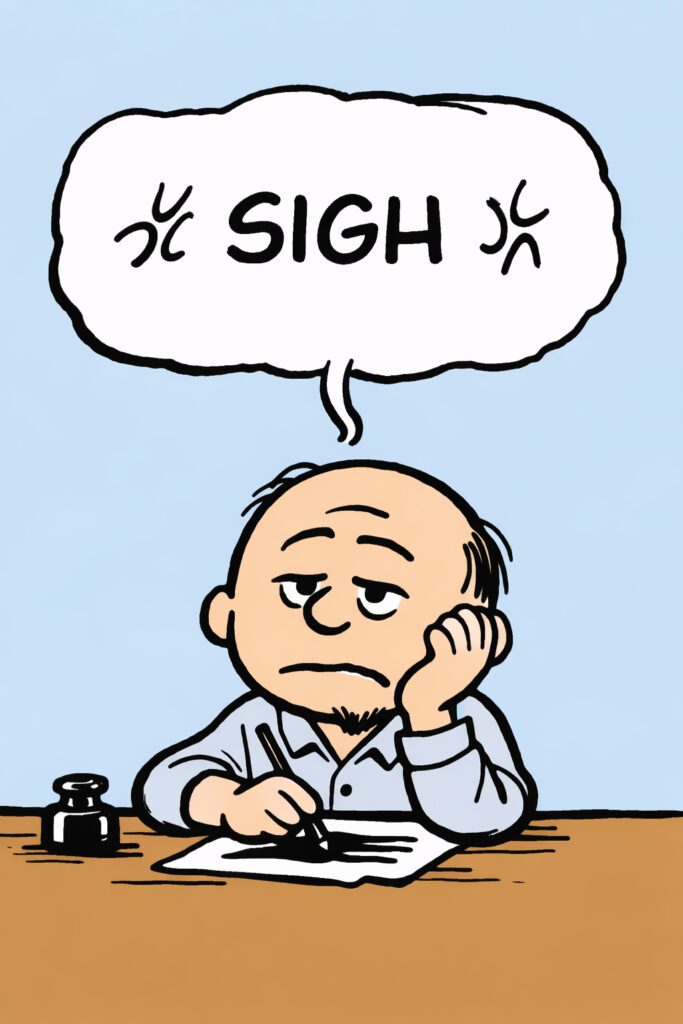
Sitting right among them, I noticed something small but surprisingly striking. From time to time, a colleague would let out a noticeable sigh … a deep breath in, followed by a long, uninterrupted exhale through the mouth, often accompanied by a soft sound that felt like the release of a burden.
As I paid more attention, I realised it wasn’t just one person. Several others did the same throughout the day. When I casually checked in with them to see what was bothering them, they could usually name a few minor things … a new email, a Teams message, a small complication … but nothing dramatic or overwhelming. It felt as though sighing was simply a way of regulating the everyday pressure that naturally arises during work.

Photo by Amandine Lerbscher on Unsplash
What struck me most was how little attention it drew. Nobody was bothered. No one apologised. No one explained. The sigh passed, and work continued. It made me realise how rarely I hear that same sound in European offices, where sighs can often be swallowed, softened, or held back entirely.
This observation made me curious. Could there be something to learn from sighing? Might it actually be doing something helpful, rather than signalling frustration? So, I did a little digging.
I first wondered what actually defines a “proper” sigh. It turns out that a true physiological sigh is not just a deep breath. It consists of two inhales. The first inhale fills most of the lungs, while the second short “top-up” inhale opens them even further. This is followed by a long, slow exhale, sometimes accompanied by a low, releasing sound or gentle hum.
Apparently, this pattern helps reopen tiny air sacs in our lungs, called alveoli, which tend to collapse over time if we only breathe shallowly. This also explains why we sigh far more often than we realise. You will be surprised to hear that we sigh roughly every five minutes.
This is necessary, because without regular sighs, our lungs would reduce oxygen exchange and make our breathing less efficient. In that sense, sighing acts like a reset button for lung elasticity. In other words, we don’t sigh because something is wrong. We stay functional because we sigh.
Because this function is so essential, sighing is hard-wired into the brainstem. Research from Stanford University identified a small cluster of neurons whose sole job is to trigger sighs. This means sighing is not a learned behaviour we can forget. The body will do it for us, whether we consciously allow it or not.
But beyond keeping our lungs working properly, sighing also has a powerful psychological and nervous-system effect. Neuroscientist Andrew Huberman has highlighted research showing that physiological sighs can reduce stress faster than slow breathing alone. This appears to be less about taking in more oxygen, and more about the long, extended exhale that follows — a momentary pause that stimulates the vagus nerve, allows carbon dioxide levels to gently rise, and signals safety to the autonomic nervous system. This may explain why sighs so often appear right before a sense of relief.
If you like, you can try this for yourself now.
Take a deep breath in through your nose. When you think you are done, gently top it up with a little more air. Then open your mouth and slowly release the breath with a soft sighing sound … one of absolute release and resignation. Repeat once more. You may notice a subtle but immediate calming effect, like a small internal reset button being pressed.

In Western cultures, sighing can sometimes be interpreted as impatience, disengagement, or judgement. As a result, many people may hold back sighs to avoid social friction. What often happens instead is that stress becomes internalised and intellectualised more than necessary.
So, perhaps the next time you feel a sigh coming … and it will come anyway … you just allow it. Breathe in through your nose, top it up, and let it all out with a sound of your own choosing.
Maybe sighing is not something to avoid, but something to make use of. Sometimes relief doesn’t come from understanding more, but simply from letting air leave the body.

Leave a Reply