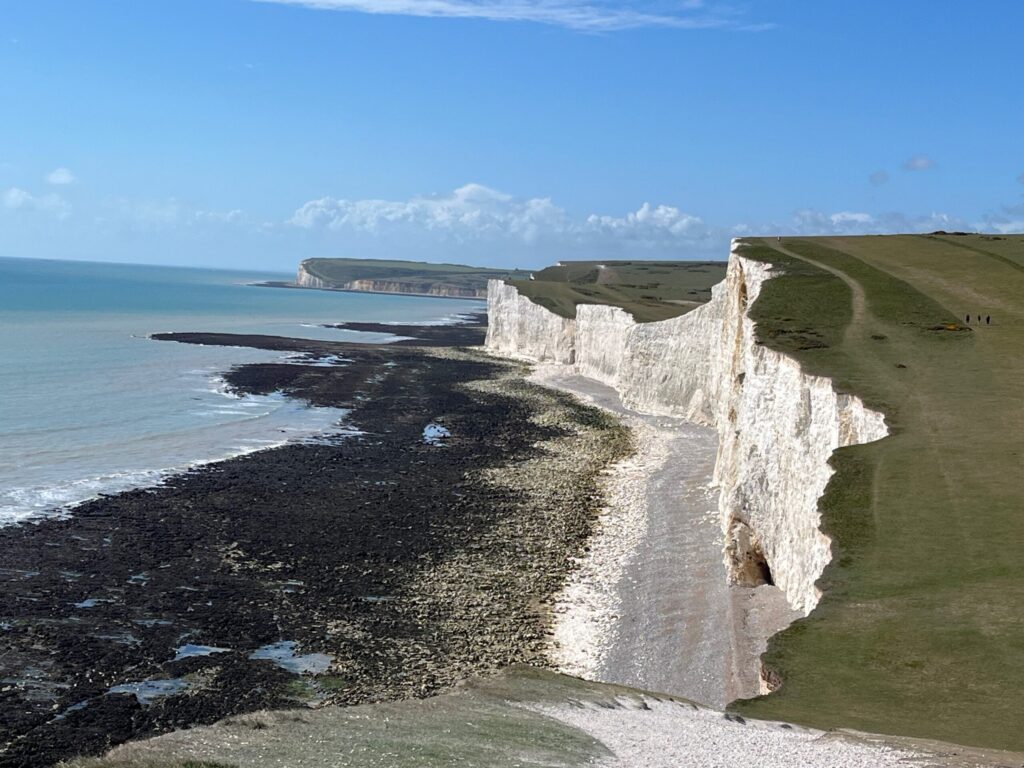
At the beginning of April, I went for a day hike in the South of England. Something happened that stayed with me … and, in hindsight, really surprised me.
I had been walking since early morning on a quiet and peaceful spring day, slowly descending into the Cuckmere Valley, approaching the famous Seven Sisters. This is a beautiful, but quite tough, 10-km stretch along the spectacular white cliffs, with constant ups and downs.
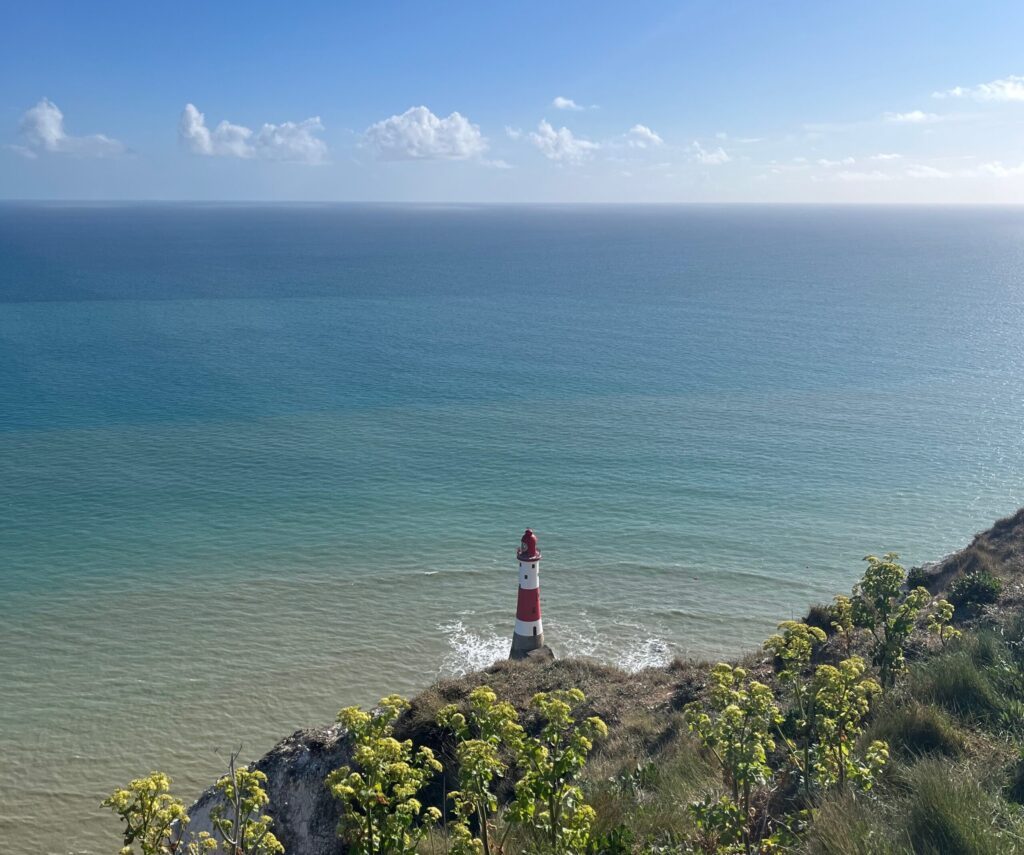
The walk ends near Eastbourne at a place called Beachy Head, which features a beautiful lighthouse. But I was about to learn that this place also carries a tragic legacy.
As I approached Beachy Head in the evening sun, I stepped a little beyond the safety railing to get a better view of the lighthouse below, simply out of curiosity to take a picture.
That’s when I suddenly felt someone was watching me.
I noticed a car behind me. Clearly not police, but some sort of patrol. It had slowed down, its passengers seemingly taking a closer look at me. The car was still about 80–100m away, so I couldn’t see clearly, but I felt observed. I stepped back over the railing, and shortly after, they drove off.
I didn’t think much of it until I later saw the same car again as I walked toward Eastbourne. This time, I noticed the writing: The Beachy Head Chaplaincy Team. Intrigued, I looked it up.
Beachy Head has sadly been, for many years, a known suicide hotspot. At one point, according to The Wall Street Journal, it was even considered the third most common suicide spot in the world, after the Golden Gate Bridge in San Francisco and the Aokigahara Woods in Japan.
In 2004, Ross Hardy, a Christian minister and trained counsellor, felt he needed to do something about it, so he founded the Beachy Head Chaplaincy. He had seen a recurring pattern with people arriving at the cliffs in deep distress … often alone, often unseen.
His vision was simple but powerful, “… to create a system of immediate, open-hearted response. A way to find people before it was too late. A way to offer connection and understanding before solutions.”
Today, the team is a small unit of around 22–24 highly trained chaplains, most of them volunteers. They cover the cliffs day and night, all year round. Since their founding, they have spoken to more than 7,500 people, with over 400 interventions per year.
Over time, suicide rates in the area have reduced and stabilised.
What struck me most, though, was something else.
When looking at the seasonal patterns, it turns out that suicides tend to peak in spring and early summer. This has been observed consistently across countries and over many years.
I would have expected the opposite.
We tend to associate the dark, cold winter months with difficulty. But the data suggests something different, that risk can increase when the world becomes lighter again.
One explanation is that energy returns faster than mood. After a difficult winter, someone may still feel low, but now has more activation, more momentum. Maybe our inner life doesn’t always follow the seasons we expect.
So while the world is waking up with light, warmth, and a sense of renewal, some people may find this time unexpectedly hard.
Standing there on the cliffs at Beachy Head, I now realise that someone at that very moment had my back. Someone who, if needed, would have approached me gently and without judgement. Someone who would have listened.
And that stayed with me.

Arriving back home, I felt compelled to share this little story.
Because just like the chaplains at Beachy Head noticed me that evening, there may be someone in your environment who is struggling, perhaps especially so at this time of year. Maybe it’s an opportunity to reach out. Gently. Supportively. Without judgment. Without pressure. Just to listen.
Or maybe you yourself feel a bit off, even as the world seems to be getting brighter and warmer every day. If that resonates, please know: You’re not alone, even if it doesn’t feel that way. There is support out there through friends, through services, through people who care.
Let’s look around … and be there for each other.
Cheerio
Joerg
P.S. If you’re curious about the people behind Beachy Head Chaplaincy, you can learn more here.

Leave a Reply